Travelling in Morocco

Morocco is a safe place to travel, even as a woman alone.  Common sense is all you need really to get by without problems.  Below is a collection of useful information to help you get off on the right foot.  We are always happy to discuss these matters in more detail with you by telephone or email.  We have many years of experience and have lived in the country for over a decade and will be able to help you with any questions you may have.
Holiday shopping in Morocco

When travelling to Morocco, many people look forward to the exciting shopping that is on offer here.  Morocco as a whole is a place with wonderful artisans working many different ancient and highly skilled trades to produce wonderful objects that are sold for small fortunes in Europe and the west.   It would be a pity to come to Morocco and especially the cities of Fes and Marrakech, where the opportunities to purchase such items at much lower prices than you could find them for in the UK.

People travelling to Morocco however are often upset to find that shopping in Morocco ca be quite hard work!  On this page, my aim is to give you a little insight into how things work in general when shopping in the various areas of Marrakech, its souks and alleyways (where most visitors tend to do their shopping).

I have spent years in the country and some of my time was spent buying goods to export to the UK (I had a couple of shops in England selling some of the best that Morocco's artisans had to offer).  I also used to accompany serious shoppers into the souks to make large purchases of real antiques, carpets and furnishings (often to fit out businesses in Europe such as restaurants, shops, hotels and houses), so I have a rather deep understanding of how the souks work and how prices are come to.

Shopping in Morocco in general falls into two categories:

- Shops, Bazars, markets and street vendors who specifically target visitors to the country (commonly known as tourists).
- Shops or outlets that cater mainly to the locals and where prices are generally speaking 'fixed'.

Lets talk about the latter first.  These places generally work by announcing an initial price that is sheer blind robbery (were you to pay it!)
The aim is to start by giving you such a high price that by the time you have (if you have the patience to do so) haggled it down to 50% of that initial asking price still made the shopkeeper's day a good one.  In many cases the price that will be initially asked (certainly for the larger items with a value of over £60) will be more than you could get it for in London or New York. 

Most tourists know that haggling or bartering is required to close just about any deal in these places but what they don't realise is that very often this has been taken into account before giving you the initial asking price.  Therefore they tend to feel that by the time they have achieved a reduction of half of that initial asking price, that they have done an excellent job, got a great bargain and tend to go ahead and buy whatever it is that they are haggling over.

The sellers are clever and have had many years if not many generations to understand how we, the westerners work…  They play a very slick game and generally make a good living out  of it.  Now, I am not going to tell you that you mustn't buy stuff, but my general warning is this:

Before you buy anything, ask yourself if you would pay that amount for this item if you saw it for sale on your local high street?  I think it is safe to say that the answer to that question for many people is no, but they only realise that once it is too late and they have a bag of rubbish that they now have to get on the plan home etc..

My advice is that you should enjoy the markets and don't worry too much about the prices of small items (under £15-£20) BUT she it comes to the larger items you MUST be more vigilant as the common trick is to tell you that things are 'antiques', very old, very precious etc..  Let me tell you now that in the tourist markets there is today, very little in the way of real antiques on sale.  There are a handful of serious antique dealers in Marrakech but they are few and far between and generally speaking you are unlikely to come across them unless you are really looking for them!

Carpets are a common 'danger zone' for people looking for bargains in the souks…  Morocco does produce some lovely carpets and they are a great thing to take home with you and can look great once in your home.  Be careful however with the prices as most of the 'kilim' rugs(often woven from what they tell you is silk (when it is actually a type of cotton dyed with natural dyes) and similar woollen carpets, are seriously over priced when sold to tourists.  When I say overpriced, I don't mean double but sometimes as much as 10x their actual value!!

Generally speaking, simple woollen carpets measuring roughly 2m x 3m cost in the region of 1,000 DH (£70) when bought by locals or people in the know.  These same carpets are often sold to tourists for hundreds (if not thousands)of pounds!  When I was living in Marrakech and looking after our many clients needs for 12 years, I can't tell you the number of times that people proudly showed me rugs that they had bought in the souks for ridiculous money.  In the cases where they had paid 2 or 3 times what I would have paid for it, I generally smiled and let them know that they had themselves a great carpet but when it was 5-10x what I would have paid, I often used to send them back to the shop requesting a decent price or a total refund on the purchase (I would call the shop and threaten to report them to the ministry of tourism and they would very quickly refund the client so as not to lose their right to sell).

I don't want o put you off shopping in Morocco, far from it in fact butI do want to raise awareness amongst you, our precious clients that care needs to be taken when shopping.  I would prefer that you take a photo of any large purchase and quickly email it to me from the shop from a smart phone and I will tell you if you are doing something reasonable or NOT!

Listen, you are never going to pay the same prices as a local or as I do but that is normal…  For that you would have to learn Arabic, spend years going in and out of the souks, getting to know all the 'real' prices and going to the factories where they are made so that you know how much the shopkeeper himself has aid for the item.  That is not going to happen so you need to accept that you are never going to pay 'trade prices'.  This however should not recent you form getting a 'fair' price.

The way that I prefer you make your purchases is for me to recommend some truly lovely shops where you can go in peace and know that you are paying a 'fair' and honest price.  Apart form the price, I can assure you of one thing; that the best items, the best quality, the nicest designs are not to be found in the souks and markets!

Marrakech has always had a thriving artisan community but to be honest, much of the stuff produced for the souks is of very low quality and certainly (in my opinion) of rather kitsch design.

The really lovely stuff tends to either be found in non-touristy places (very often up in the mountains, in peoples houses and in non-commercial places.  Or it can be found in a few really lovely shops, generally run by Europeans or Moroccan designers who have an eye for the 'special stuff'.

These are generally not in the souks / markets but can be found in the newer area of Marrakech called Gueliz (a really lovely area to walk around, with nice cafe life, friendly shopkeepers and pretty much fixed prices. 

Here are some of my recommendations:

IN GUELIZ (the new town area, outside the ramparts of the medina)

Place Vendome - Wonderful leather goods.  The owner is a good friend and has been there since his father started it in 1950.  Handbags, wallets, luggage, wash bags, clothing, and much more.  Fixed prices are practiced but if you say that you are with Lawrence of Morocco, you will be given a small discount.

On the corner of Avenue Mohommed V and Rue de la Liberte. Tel: 05 24 43 52 63

L'Orientaliste - If you are looking for somewhere to buy items with great charm, artisan products that are really worth taking home, perfect for gifts and for doing your christmas shopping!  The shop belongs to the wife of the owner of Place Vendome and the shop is only a few doors along from there in Rue de la Liberte.

Librarie Chatr - For books of all sorts (including all of the wonderful coffee table books with amazing images of all aspects of Moroccan life, design and culture.

Avenue Mohommed V (at the southern end towards the french Lycée Victor Hugo)

Marchee de Gueliz - Here you will find much of the same stuff you can find in the souks (pottery, thuya wood objects, spices, fresh foods, souvenirs and a wonderful flower market (you can buy 100 roses for as little as £10 and tae them home in the hold of the plane!
Located by the Gendarmerie Royale in the Gueliz, just off Avenue Hassan II.

The other interesting area to visit is  Sidi Ghanem (the industrial neighbourhood on the road out of Marrakech heading to Safi.  here you will find some really interesting places / people who have set up businesses producing all sorts of items such as cement tiles, iron work, wood carving, candle making, artists and furniture designers of all sorts but generally with a Moorish / Moroccan edge to what they do.  Much of this area is producing goods that are not for the local market but are exported directly to the discerning European and American retailers.  Here you can take advantage of factory outlet prices (wholesale prices) even though you may only be buying in small quantity.

In SIDI GHANEM (the new industrial zone on the road to Safi, just outside town)

Florence Teillet Showroom - for wonderful hand-woven fabrics - everything from desert tones to vibrant shades.

Tel: 06 61 22 59 05

Amira - If you are planning a big party or a wedding it's almost worth trekking here to source your candles, some of which are the size and shape of Ali Baba jars. Argon scented ones are the best.

277 Sidi Ghanem, Marrakech  Tel: 05 24 33 62 47

Lilah Spirit -  does great one-off objects, wonderful linen and L'Orientaliste scents.

294 Sidi Ghanem, Marrakech

Via Notti - The ideal place to find high quality bed linen made with Egyptian-Italian cotton, decorated in Morocco. Although a little on the expensive side, it is definitely worth a visit. A full set will cost between 2,000 and 3,000 dhs (£158-£238).

278/322, Sidi Ghanem; Tel: 05 24 35 60 24

Peau D’Ane - Here you can choose from an amazing selection of silver and other metallic designs in a myriad shapes and sizes.

297, Sidi Ghanem, Marrakech Tel: 05 24 33 65 50

La Boutique de L’Atelier -  There is no better place in Sidi Ghanem to find good quality design objects than this tiny shop. From stylish plates and trays to colourful aprons, lamps and even paintings - if you can’t make up your mind about what to buy, there are lots of staff at hand to offer some helpful advice.

294, Sidi Ghanem Tel: 05 24 35 62 06


Useful telephone numbers for travellers in Morocco.

Useful telephone numbers

Directory enquiries: 160
Police: 190 or 112 from mobile phones.
Gendarmerie Royale: 177 (police outside the cities)
Ambulance: 150
Fire brigade: 15
SOS Medecins 24/24: 05 22 98 98 98
Anti-poison centre: 081 00 01 80 (for any exposure to poison such as snakeor scorpion bites.) www.capm.ma
Pasteur Institute for vaccinations: 05 22 26 20 26 www.pasteur.ma
Mondial Assistance: 05 22 97 47 47 (international travel insurance)
Train station info: 08 90 20 30 40  www.oncf.ma
National airport office: 05 22 53 90 40 / 05 22 53 91 40  www.onda.ma/onda/an

British Embassy in Rabat
28, rue Amir Sidi Mohamed
Souissi,
Rabat
Tel: +212 537 63 33 33
Fax: +212 537 63 33 66
Embassy website: www.ukinmorocco.fco.gov.uk
Facebook page:  UK in Morocco
Consular section email: rabat.consular@fco.gov.uk

British Consulate Marrakech
47, Ave Mohamed V (next to Marrakech Grand Prix store), Gueliz, Marrakech
Tel: +212 524 42 08 46
Fax: +212 524 43 52 76

British Consulate Agadir
English Pub,
20, boulevard 20 Aout,
Agadir
Tel: +212 528 84 12 19
Fax: +212 528 84 12 57

British Consulate Tangier
Mobile:  +212 661 09 34 11
(between 08.00 hrs abd 12.00 hrs)
Outside these working hours, please call: +212 537 63 33 33


Ramadan in Morocco

Ramadan is the ninth month in the Islamic lunar calendar.  The exact dates of the month cannot be determined in advance due to the sighting of the crescent moon, but it generally moves forward by 11 days (earlier) each year.  It is a holy month for Muslims during which they abstain from eating, drinking and smoking between sunrise and sunset.

Q:  Do I have to fast as a non Muslim?
A:  You are not expected to observe the fast, however, out of respect you should avoid eating (including chewing gum), drinking and smoking in public.

Q:  How should I dress during Ramadan?
A:  It is advisable for women to avoid short skirts and sleeveless tops.  If visiting the beach during Ramadan, women should dress modestly (unless on an empty beach).

Q:  Are restaurants and shops open during Ramadan?
A:  In large cities, some restaurants open day and night during Ramadan.  It could be more difficult to find a place open in small villages and cities.  Most shops open at around 10 am and close about 1 hour before sunset, reopening after breaking the fast and then staying open until late at night.  It is not always possible to consume alcohol in restaurants during Ramadan.

Q:  When are pharmacies open?
A:  In general, pharmacies open from Monday to Saturday from 9 am until about 1 to 1.5 hours before sunset.  Only duty pharmacies stay open for the rest of the evening / night as well as on Sundays.  Their details are usually displayed on any pharmacy window.

Q:   What are the opening hours for business including banks?
A:   Opening times for most businesses and banks are from 9 am until 3 pm.  Be aware that on Fridays, very few people go back to work after the midday Muslim prayers.

Q:  How is the road traffic during Ramadan?
A:  Busses may alter their schedules or routes to match the setting sun or to reduce traffic.  Taxi drivers are less likely to engage in afternoon or evening travel.  Trains generally keep to their given schedules.
At dusk the traffic is heavy and drivers tend to speed and drive more irresponsibly as they head home to be with their families and break the fast.

Driving distances

Travel Distances

Converting holiday money to Moroccan Dirhams

Changing Money


The Moroccan Dirham is not available to be bought outside of Morocco.
For your holiday it is best to take GBP (pounds sterling) in cash to change in Morocco.

Large hotels and banks all use the same government controlled exchange rate.  Smaller establishments such as riad's and small boutique hotels who are not registered as an official exchange place offer slightly less advantageous rates to cover the change of rate that can happen in the time between them changing your money and getting it to the bank.

You can also change travellers checks.

In Marrakech airport there is currency exchange office in the baggage hall on arrival.  If
this is closed when you arrive then any bank in town or your hotel will be able to change
money for you.  We recommend that for the best rate use a bank in Morocco.

You should retain your receipt for the money you change and keep it safe until you leave the
country as this will be required to change your unspent Dirhams into pounds or Euros on your
departure (at the bank in the airport).

ATM (cashpoint machines) are widely available throughout the country.  Note however that the
exchange rate that you get from the card companies will be less cost effective than changing
money in a bank or hotel.

Credit / debit cards are widely accepted in hotels, restaurants and shops throughout Morocco
however the smaller establishments such as street food restaurants and small market shops
will not accept these.


tipping morocco

Service & tipping

In Morocco it is customry to tip almost everywhere you go.  Typical amounts to tip are:

  • Simple street cafe's 3-5 Dh
  • Chic modern cafe / lounge bar 10-20 Dh
  • Simple restaurant (street food) 5 Dh
  • Smarter restaurant 50-100 Dh
  • Hotel porter 20-50 Dh
  • Guardien for car parking 2 Dh

Hotels - what to expect

Hotel Classification

The grading of hotels in Morocco can be confusing. Moroccan standards or ratings should not be compared with those of other countries. Hotel classification is the sole responsibility of the Moroccan authorities and bears no relation to the prices we have negotiated individually with hotels. The authorities can change a hotel grading without prior notice. There are differences between the standards of different hotels of the same grade.

Riads

The layout of a Riad is unlike that of an hotel, in that they are not purpose built, soundproofed modern buildings with dedicated designed facilities. They are heritage buildings designed originally to provide wealthy families with privacy and comfort with all rooms facing in towards a central courtyard, the heart of the building - the modern adaption and conversion of these allows for guest to experience the unique accommodation, whilst the former utility areas are now used as service areas. This formula is generic now amongst almost all the hundreds of converted Riads and "Dars" in Morocco. The rooms may not always provide for intimate privacy and some noise may be heard due to the general occupation and workings of the building.

Lawrence of Morocco uses its own "palm tree" rating system which reflects the following:


Facilities at hotels

It must be noted that some hotel facilities, as described on our site, may, at certain times not function fully. This may be due to many reasons e.g. a pool being emptied and cleaned. These decisions are part of normal hotel running and are at the discretion of the hotel management. If, however, we are made aware of any closure or of any other alterations to the hotel description, we will pass this on to you as soon as we can, though it is rare for hotels to give tour operators advance notice of works or changes within the hotels. Neither the hotels used nor Lawrence of Morocco accept responsibility for anything outside their private grounds e.g. noise or construction work near to the hotel.  All rooms at all hotels featured in this brochure have private bathrooms with shower and or bath, w.c. and many also have a bidet.

Swimming Pools

Some hotels claim to heat their pools during the winter months. However, what they call "heated" and what we call "heated" may not be commensurate and Lawrence of Morocco accepts no responsibility for the definition of "heated" nor the distinction of Winter months.

Complaints

If you have any complaints about any of the hotels in which you stay, you should bring these to the attention of the hotel management immediately so that the problem can be resolved during your stay. If you encounter a problem and mention it to the Reception or Manager and nothing is done about it, then we suggest you put it in writing to them and send a copy to us on your return which will enable us to deal with it on your behalf. Dress in almost all hotels is informal.

Service

Service in Morocco is generally good but it must be said that reaction times of staff can at times (especially in hotels in the south of Morocco or in small rural hotels) be longer than commonly acceptable in Europe.  The main reason for this is often in extra-urban areas there are no available staff with proper hotel school training and owners of these rural properties take on and train up local villagers.  These people do there very best to do a good job, but at times the lack of organisation can be felt when waiting for a drink or a meal.  We suggest that when things are taking a long time, you should not be shy and go and ask to speak to someone more senior at the hotel.  These delays are generally very quickly sorted out IF YOU ASK..!


Car rental & driving

Roads in Morocco between the cities are good.  Motorways run from Tangier in the north down through Rabat, Casablanca, Marrakech to Agadir.  The main roads are generally of a good quality as they have been built and are maintained for the network of trucks that supply the country south of Marrakech.  Even though the roads are good, one should always keep an eye out for cars that forget to indicate or pull out without any prior warning!  Children at the sides of the road are generally very aware of the traffic even though they may not seem to be paying any attention.

Driving in the cities is more hectic and can take a few minutes to get used to. Generally the medina (or old city) areas are the busiest areas of a city and can be a little intimidating at first as people seem not to take any notice of traffic and just walk in front of cars, sometimes with donkeys, bicycles or children in tow..  The key in these areas is to keep moving forwards but slowly (a walking pace).

Parking in town is generally not a problem.  Most places where you will park have a man called a "guardien" who helps you park and then watches over your car until you return.  You should pay him 2 or 3 Dirhams upon returning to your car.  The "guardien" wear a bronze metal badge.  Do not leave valuables in sight inside your car.  If you must leave items in the car put them in the boot (preferably before you park so that noone sees that you have put them there!).

You must keep your driving licence and car papers with you inside the vehicle at all times when driving.  If you are stopped by the police and cannot show all the paperwork, you will be in for a long and frustrating day  with the police!

It is not necessary to rent a 4x4 car as even leaving the tarmac on the odd occasion can be done with most normal cars. Tracks are often used in more remote places to get from the main road to some hotels.

Health & Safety

Good health care is available in major cities across the country.  Even in smaller towns there are doctors to help with minor injuries, sickness and other less complicated medical needs.  If you were to become seriously ill or injured, we always advise to come back to a main city to be treated in a private clinic where all modern equipment is available.  Marrakech has an excellent hospital; Polyclinique du Sud and you should not hesitate to go there in an emergency.  

If you need a doctor to visit you in your hotel you can either ask the reception to call you a doctor or you can call our Marrakech office and Souad will be happy to arrange a doctor for you.

If in Marrakech you can call directly DR. REITZER (the official French consulate GP and our family doctor in Marrakech for the past 18 years)  Practice no:  05-24-43-95-62  or Mobile:  06-61-17-38-03

**Do not rely on ambulances to come quickly. In an emergency, get to the hospital by your own means of transport.  Ambulances are not equipped to deal with medical emergencies, they just get the patient to the hospital**


Passports & Visa

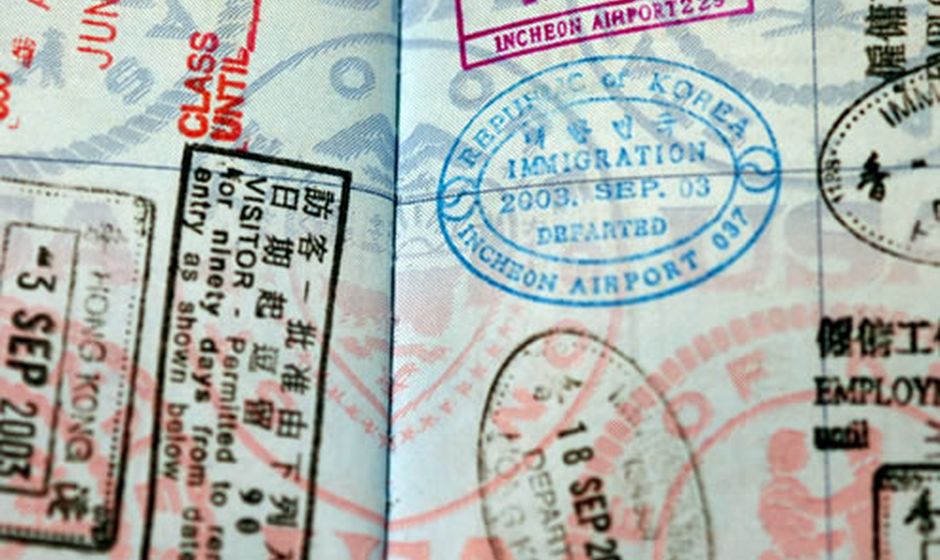
VISAS:  British nationals do not require entry visas to Morocco for the purpose of tourism, for visits of up to three months.

Non British nationals should contact the Moroccan Consulates Visa section in London 0207-581-5001.

PASSPORT VALIDITY:  Your passport will need to be valid for at least six months from the date of entry into Morocco. When entering the country, particularly during the busy summer months, you should ensure that your passports are stamped. You will then be able to stay in Morocco for up to three months. Some tourists have experienced difficulties leaving the country because their passports bear no entry stamp.
 

Local Assistance

Our Marrakech office openied in 1993 (managed by Souad and her team) is there to assist you with anything from organising of excursions, transfers, general help and assistance and even shopping advice!  We also give you 24 hour email support during your trip whcih you can use to get a bit of advice whilst out and about with your iphone or blackberry..  just send any questions you may have for a QUICK RESPONSE to our email address on your travel wallet.  

We have a large network of contacts in Morocco and will be happy to put you in touch with people who may be of use to you for specific needs.

*If you need a doctor during your trip, either call Souad in Marrakech or email direct to our offices 24/7 we will put youin touch with the best doctor wherever you are*.